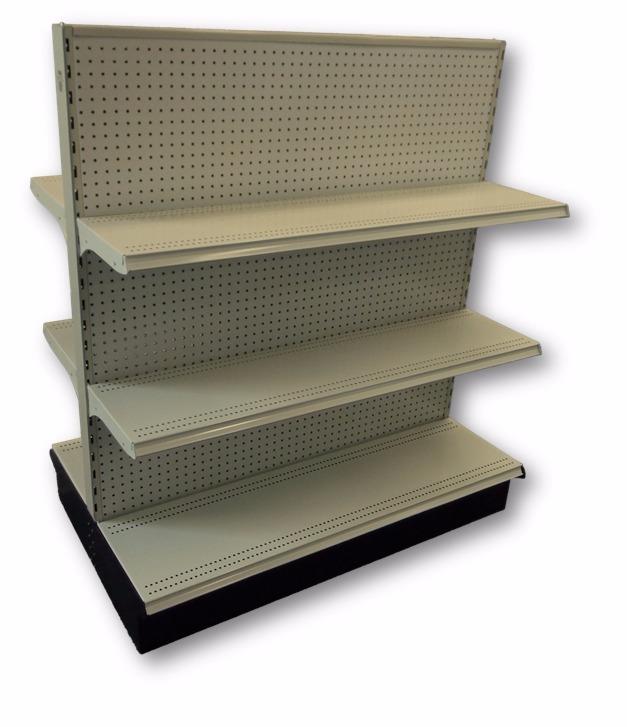
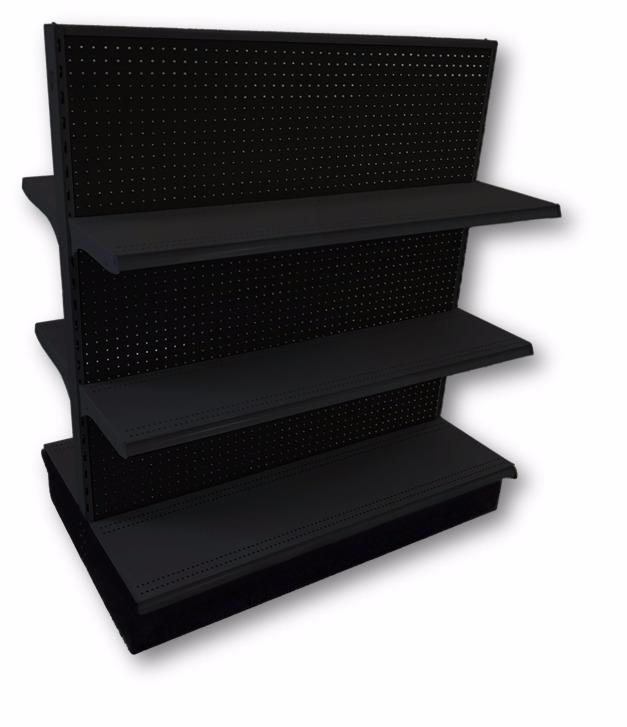
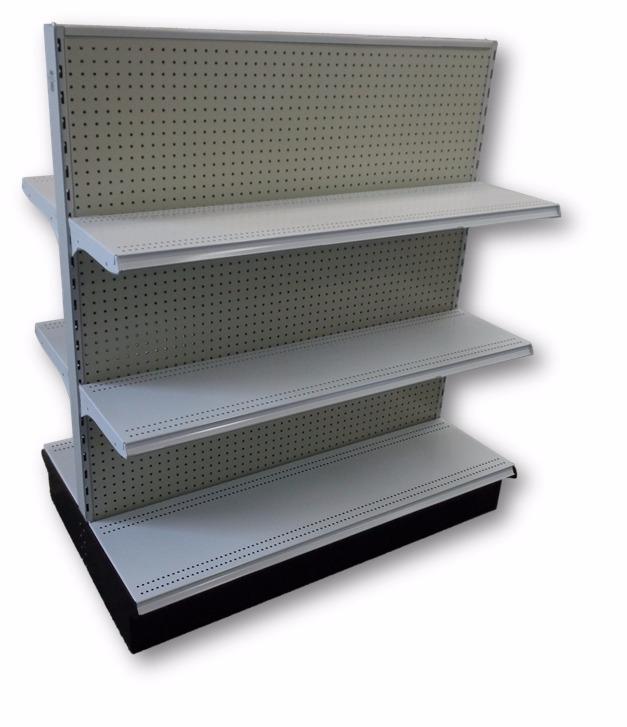
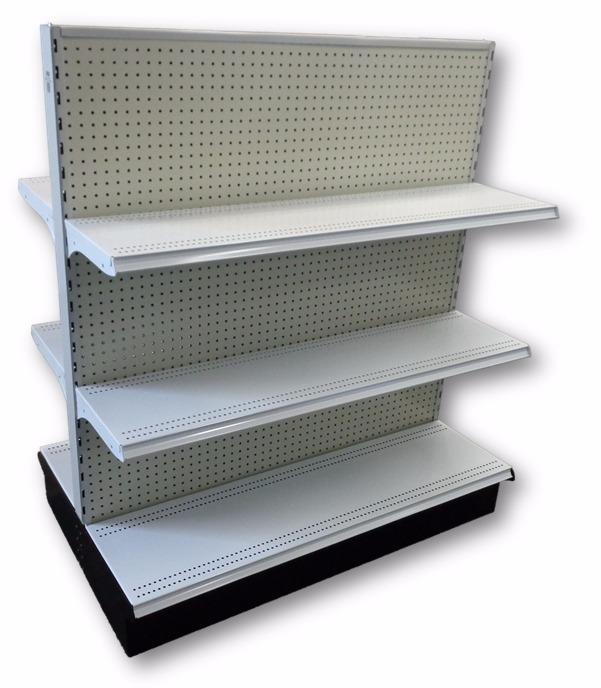
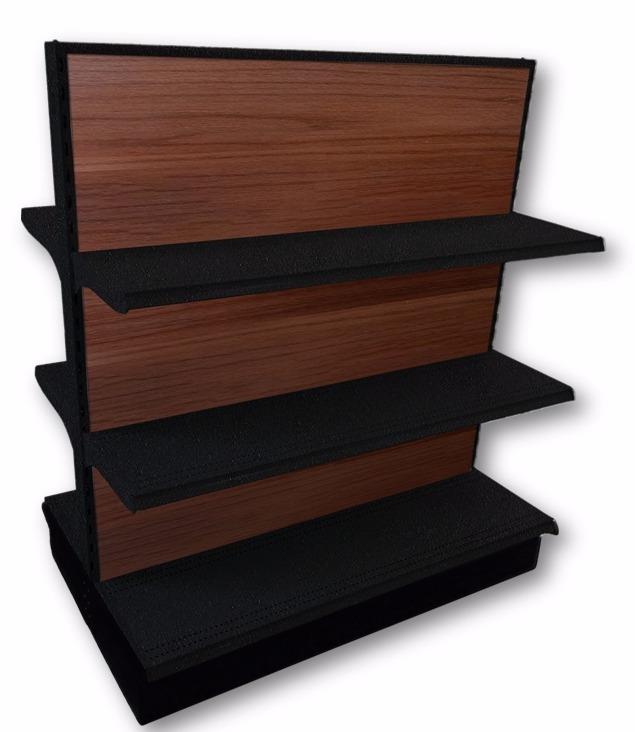
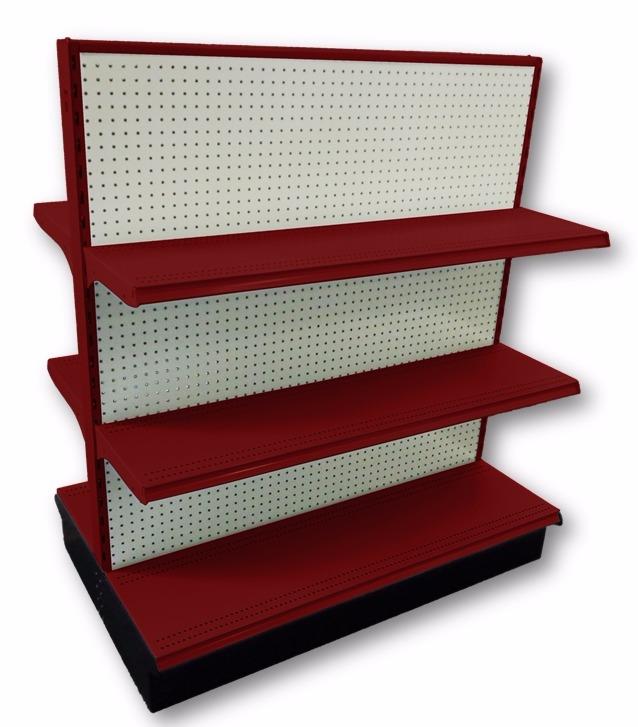
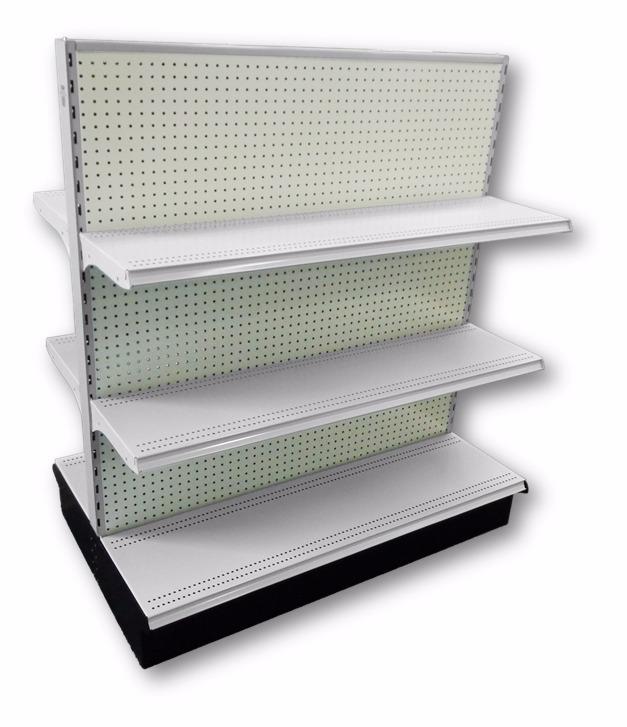
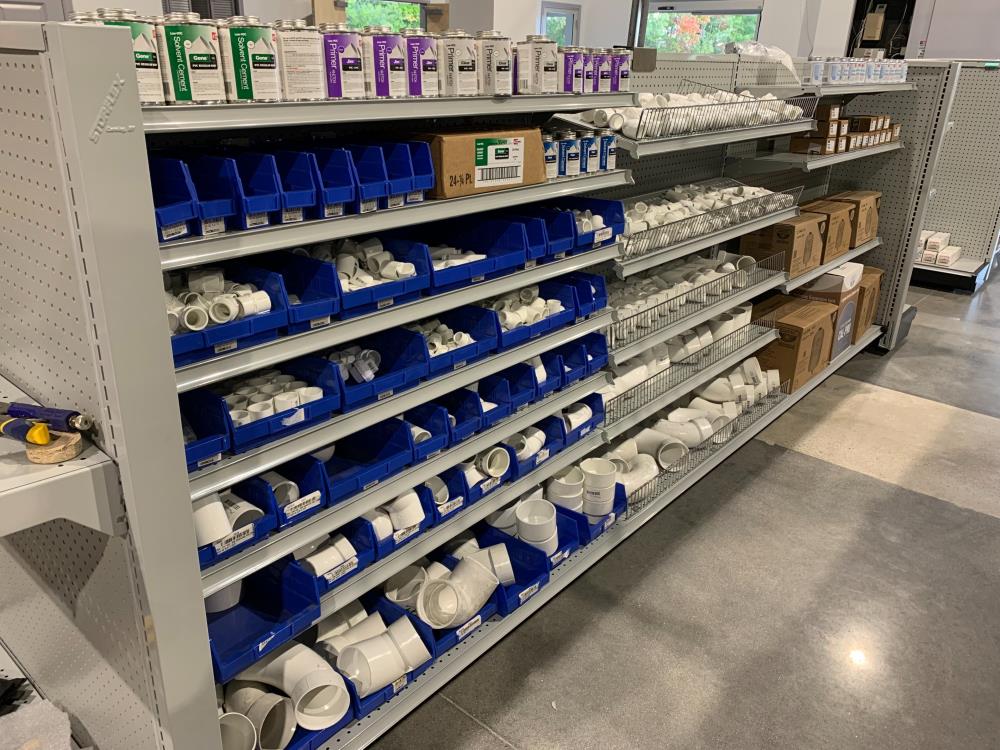
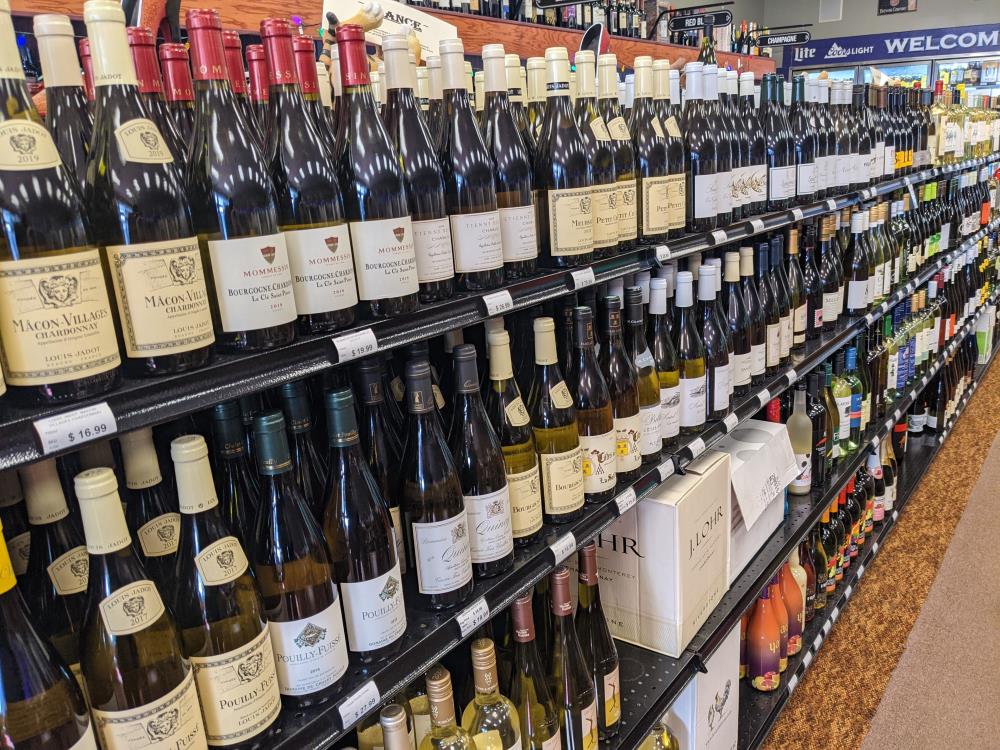
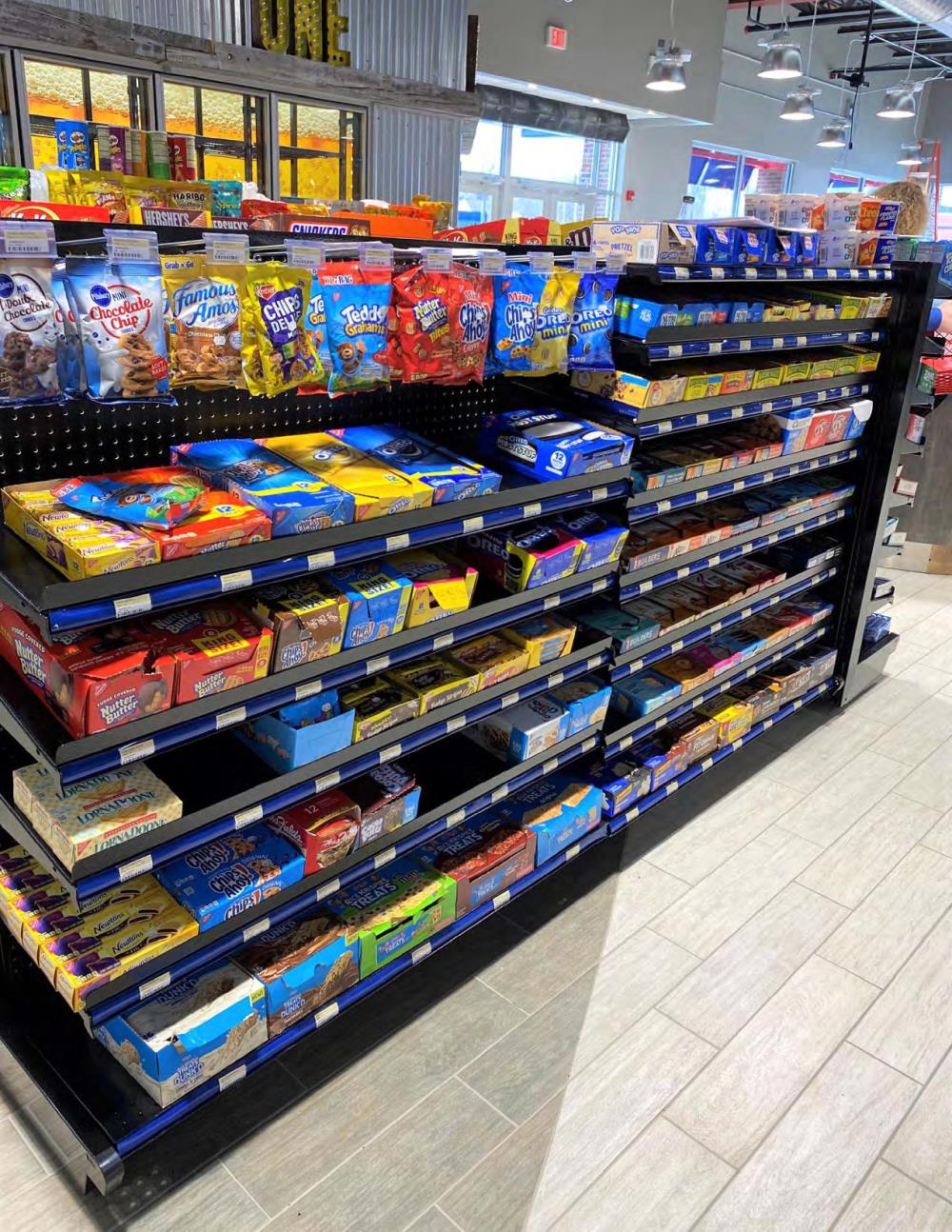
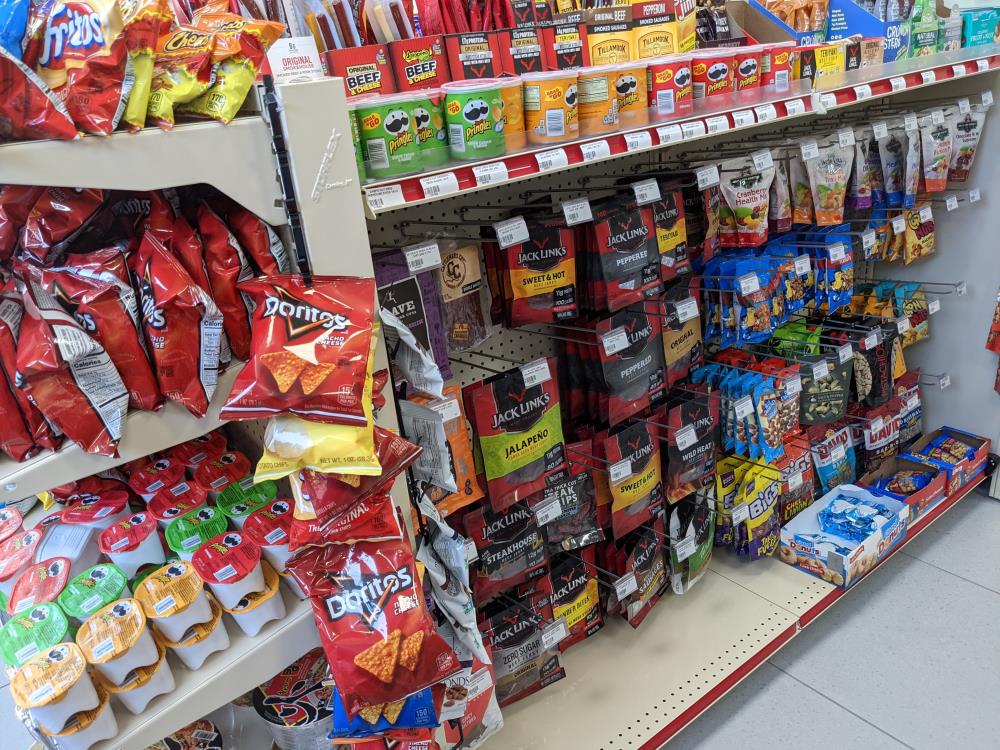
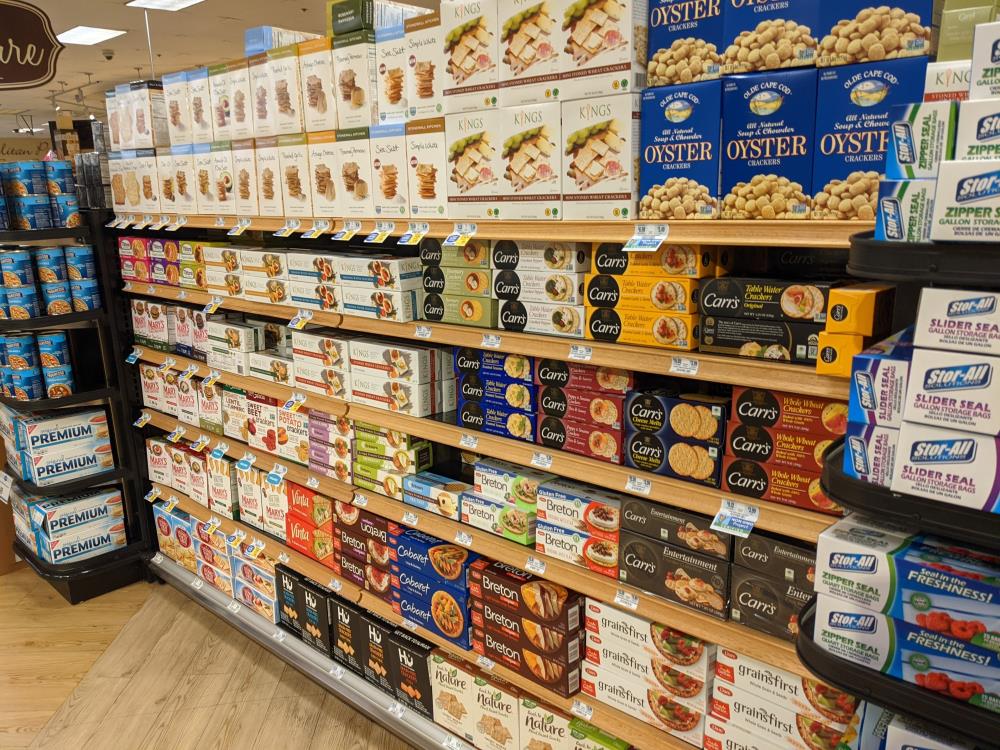
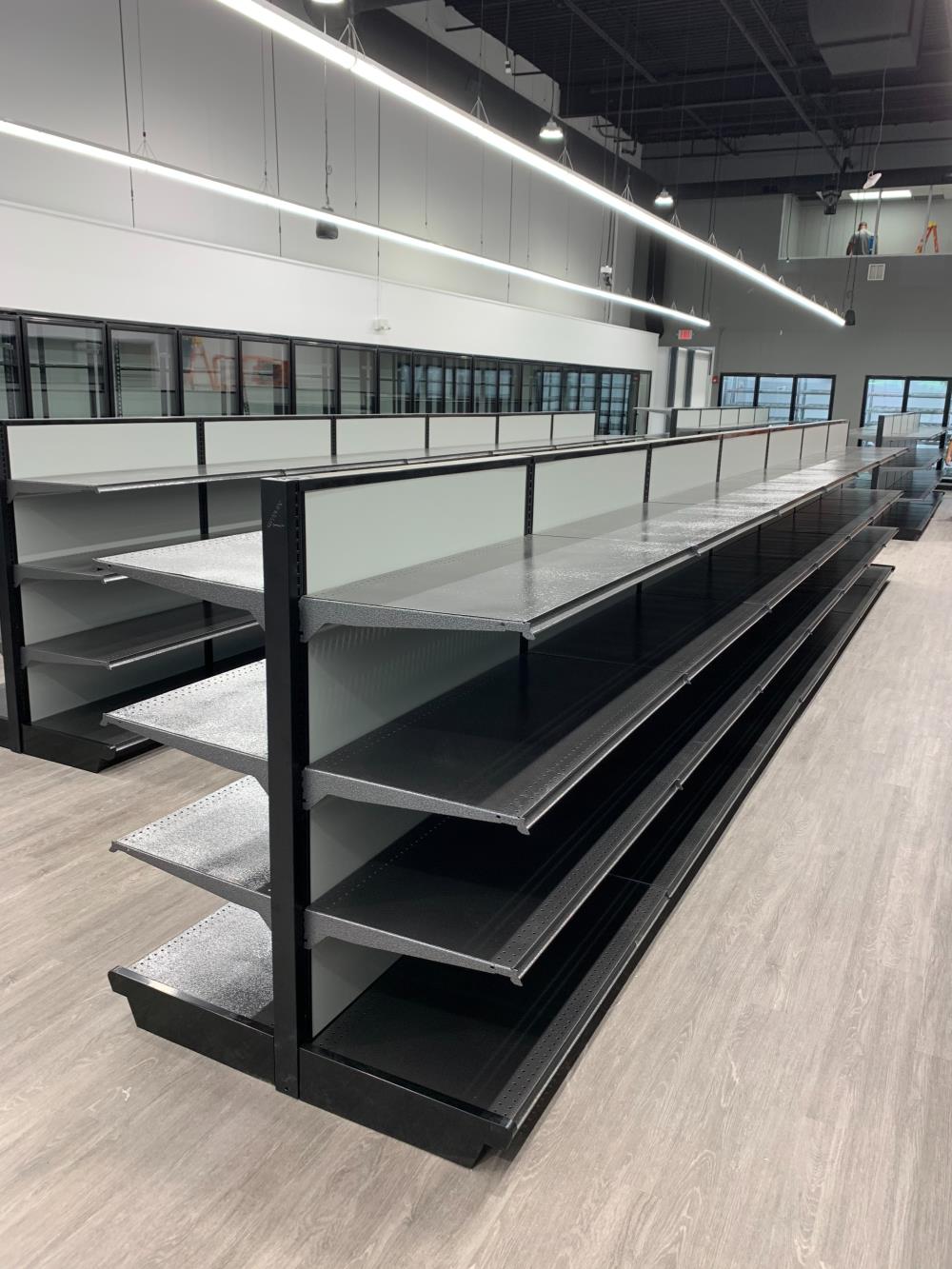
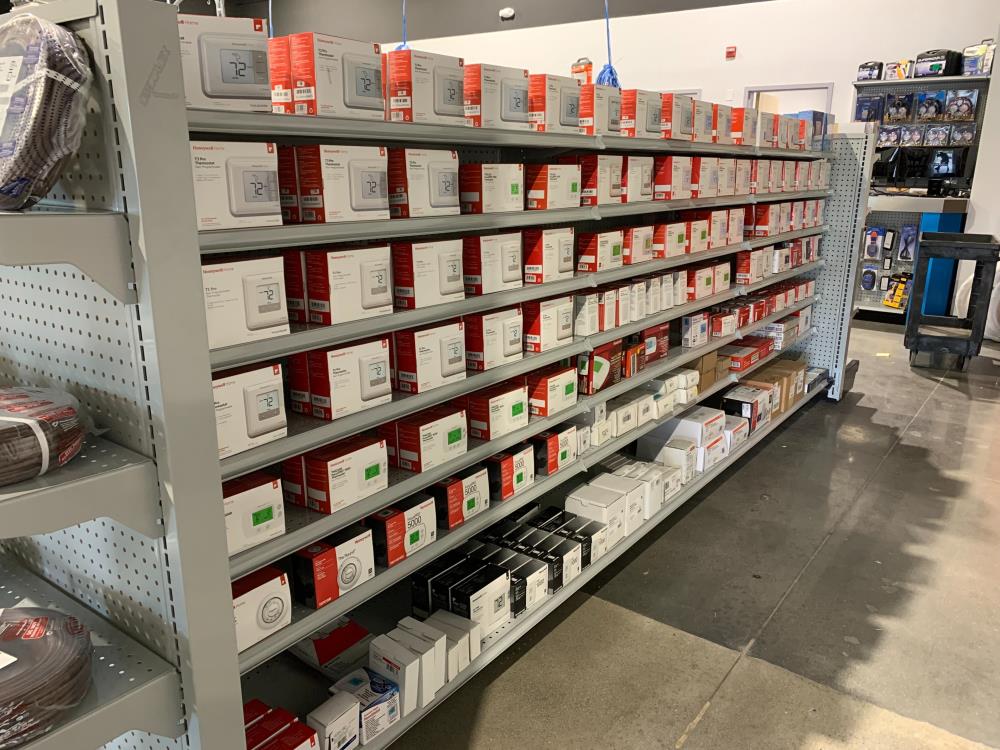
A gondola section is uprights, base shelves, back panels and the hardware that holds them together. Upper shelves and accessories are ordered separately, which is the thing most first-time buyers are surprised by.
We manufacture them in our own factories here in the United States, and every order ships direct from the factory in Corning, New York.
What are you working on?
Pick the job and we will point you to the right part.
- Outfitting a new store from an empty floorStore PlanningInstallation
- Adding to a run you already ownGondola AccessoriesUpright Extenders
- Running shelving around the perimeterWall Shelving
- Finishing the end of an aisleEnd Cap Displays
- Hanging stock on hooksPerforated Board HooksSlatwall Hooks
- Working out colorsColor Guide
What is in a gondola section
A gondola is sold as a section. The section includes the uprights, the base shelves, the back panels and the hardware.
Upper shelves and accessories are sold separately, so count them in when you are working out what a run needs.
Base shelf sizes can be offset, so a run does not have to be one depth the whole way along. That is how you give the bottom of a run more depth for heavy or bulk stock and keep the upper shelves shallower.
Working out the size of a run
Gondolas are made in nine heights and six widths. Height is usually decided by sightlines, how far you want staff to see across the floor, and width by how the sections divide into the wall or aisle you are filling.
| Dimension | Available |
|---|---|
| Heights | 36”, 48”, 54”, 60”, 66”, 72”, 84”, 96” and 108” |
| Widths | 18”, 24”, 30”, 36”, 42” and 48” |
Two sizing habits are worth knowing. Height is usually a store-wide decision, because a floor reads better when the runs line up, and the taller fixtures go against the walls where they do not block the view across the room. Width is a per-run decision, worked backwards from the length you have to fill.
If you are not sure what fits, our store designers will lay the floor out from your measurements, the type of store and roughly what you are stocking. See store planning and design.
Where the run goes
Most stores end up with two kinds of run. Shelving around the perimeter against the walls, and shelving through the middle of the floor forming the aisles.
For the perimeter, wall units are built the same way, with the same leveling screws, reinforced uprights and spring steel locking clip, and in the same heights. One thing to plan for: we recommend that wall units be secured to a structural member. If you are not sure how, Customer Service or a Handy sales professional will talk it through.
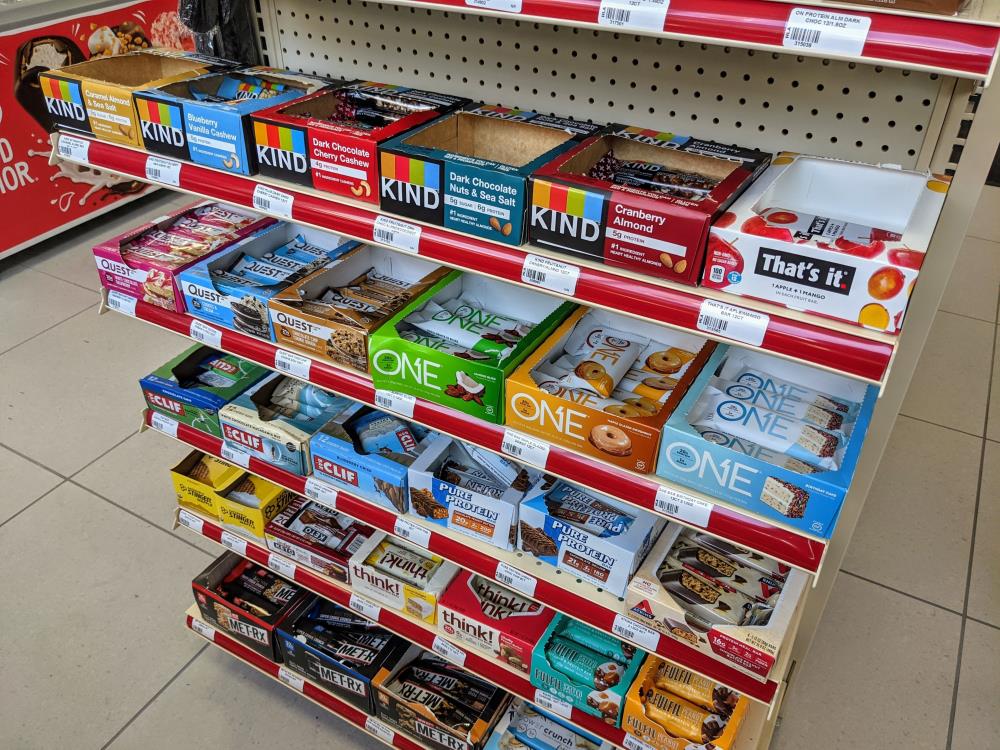
At the ends of the runs, end cap displays finish the aisle and give you a promotional face that shoppers walk straight into. An end unit should always match the height and the width of the gondola next to it, so settle the run before you order the ends.
Choosing a back panel
The back panel is the decision that changes what a run can actually hold, and it is the one buyers think about least. Handy gondolas take pegboard, slatwall, gridwall and solid board.
| Back panel | What it is for |
|---|---|
| Pegboard | Hooks for hanging stock. The most flexible option for small packaged goods and anything that hangs. |
| Slatwall | Horizontal slots that take slatwall hooks and brackets. A cleaner finish than pegboard for the same job. |
| Gridwall | An open grid. Lighter looking, and it takes baskets as well as hooks. |
| Solid board | A plain backing. Use it where nothing hangs and you want the merchandise to be the only thing the eye lands on. |
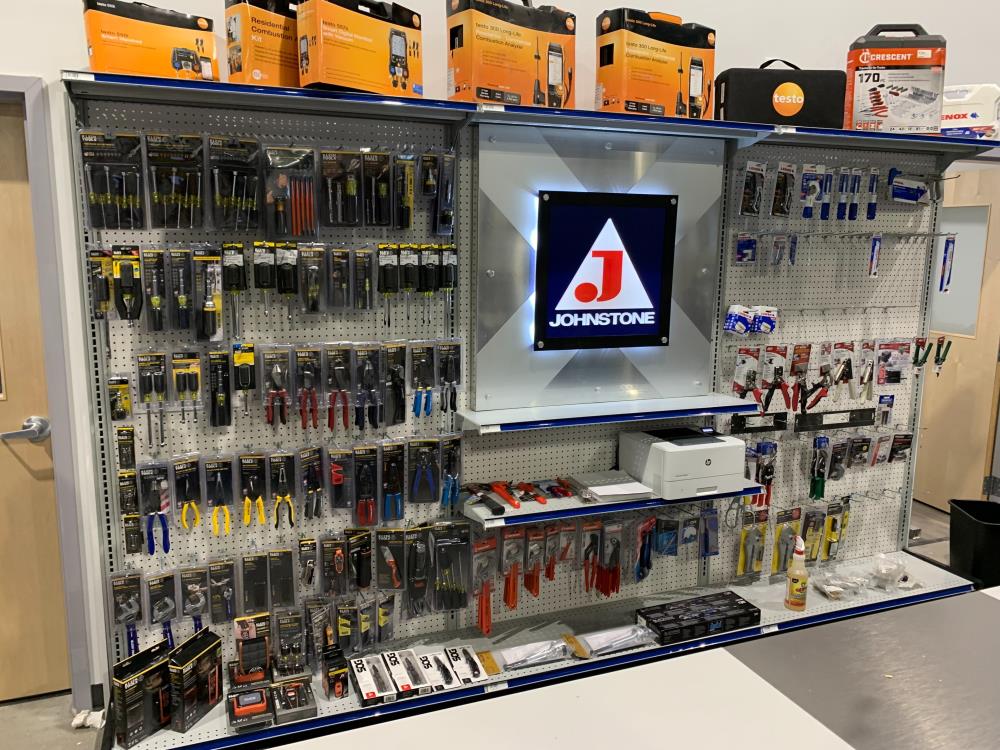
You do not have to pick one for the whole store. It is normal to run pegboard where stock hangs and solid board where it does not.
The panel also decides how much of the run you can change later without ordering new fixtures. A hanging back takes hooks, baskets and sign holders, so the same section can hold packaged goods one season and hanging stock the next. A solid back gives you shelves and nothing hanging, which is the right answer when the merchandise is boxed and the look matters more than the flexibility.
Will it fit the gondolas I already have
Every new Handy shelf is compatible with every Handy gondola ever manufactured.
In practice that means a store running Handy fixtures can add shelves to an existing run instead of replacing the run, and a shelf ordered today fits a gondola bought decades ago.
We sell new shelving only. We do not sell used.
Extending and reconfiguring a run
A run does not have to stay the height it was bought at. Upright extenders change the height of existing fixtures, and they go in and come out again without disturbing merchandise that is already out. They come in three kit types: peg, see-through and open bottom.
Beyond height, the gondola accessories line covers the shelf inserts, hooks, baskets and sign holders that change what a run does without changing the run itself.
Putting it together
Gondolas are built to go together on site. The base shoes arrive factory pre-assembled and welded, the base shoe assembly goes straight in, leveling screws bring the run true, and a spring steel locking clip holds the shelves.
Assembly instructions, the section details sheet and the base shoe and assembly videos are linked in the Resources panel on this page. If you would rather not do it yourself, we provide turn-key installation for everything we supply.
Two things to settle before the first section goes up. Decide which end of the run you set out from, because a run that does not divide evenly leaves a part section, and you want that landing at the hidden end rather than the one shoppers walk into. And find the low spot on the floor first, so the leveling screws are working to a known starting point.
Colors
The swatches for this product are shown above. The full range, including which finishes carry a premium, is in the color guide.
Finish is chosen per order, not per fixture, so a new run can be specified to match a store you already have.
Lead times, minimums and pricing
Lead times run 2 to 6 weeks depending on the product. The minimum order is $100.
Customer Service prices small orders and additions to an existing store. New stores and large projects go through a sales professional, because those are quoted off a layout rather than a parts list.